Celebrating Christmas with Music: How Simply Sunshine Engages Children in Joyful Learning
Christmas holidays bring more than just decorations and treats at Simply Sunshine Early Learning in Moranbah. The sounds of children singing festive songs and playing instruments fill the air, turning every moment into a chance to learn. For parents and childcare providers, Christmas music offers a unique way to support language, movement, and social skills while keeping the festive spirit alive. Here’s how music shapes joyful learning during this special season. Visit https://simplysunshine.com.au/home/#contact to learn more about our music-rich curriculum.
The Magic of Christmas Music

Music creates a special atmosphere during the holiday season. The familiar tunes of “Jingle Bells” or “Rudolph” bring smiles to children’s faces and create an environment where learning happens naturally. Let’s explore why music is such a powerful tool in early childhood education.
Why Music Matters in Childcare
Music does more than just entertain young children—it helps build their brains. When children sing along to Christmas carols, they learn new words and practice speech patterns without even realising it. This natural language practice happens while they’re simply having fun.
Research shows that musical activities support brain development in areas tied to math, reading, and emotional skills. The rhythm of songs helps children understand patterns, which form the foundation for later math concepts.
For the youngest children, music creates security and comfort. Babies respond to melodies before they understand words, making songs a perfect way to connect with them. When caregivers sing to infants, they’re building bonds while supporting brain growth.
The social aspect of music brings children together, too. When a group sings “We Wish You a Merry Christmas,” they learn to listen to each other, take turns, and work as a team. These social skills are just as important as academic learning.
The Unique Power of Christmas Music
Christmas songs have special qualities that make them perfect for young learners. Many holiday tunes use simple, catchy melodies that children can quickly pick up. The repetitive nature of songs like “Jingle Bells” helps build memory and confidence.
These seasonal songs connect children to culture and tradition in meaningful ways. When kids learn “Six White Boomers” or other Australian Christmas songs, they gain a sense of cultural identity while enjoying the music.
Christmas music also sparks imagination. Songs about Santa, reindeer, and magical snowfall (even in our hot Queensland summer!) encourage children to picture scenes beyond their everyday experience. This mental imagery builds creative thinking skills.
The emotional impact of Christmas music shouldn’t be overlooked. These songs often bring feelings of joy, excitement, and wonder, positive emotions that create the perfect state for learning. When children feel happy and engaged, their brains are ready to absorb new information.
Connecting Music to Learning
Christmas music works as a teaching tool across many areas of learning. When children count “Five Little Reindeer” or follow the sequence in “The Twelve Days of Christmas,” they’re building math skills through song.
Physical development happens naturally as children dance and move to holiday music. Clapping along helps with coordination, while actions that accompany songs like “Rudolph the Red-Nosed Reindeer” build motor skills and body awareness.
Songs create natural opportunities for literacy. When we display the words to Christmas carols, children begin to connect the sounds they’re singing with the written letters. This early reading exposure helps them understand that print carries meaning.
For children learning English as a second language, music offers a fun, pressure-free way to practice. The repetition in songs helps them learn new words and phrases, while the melody helps with pronunciation and the rhythm of speech.
Simply Sunshine’s Musical Curriculum
Daily Music Time
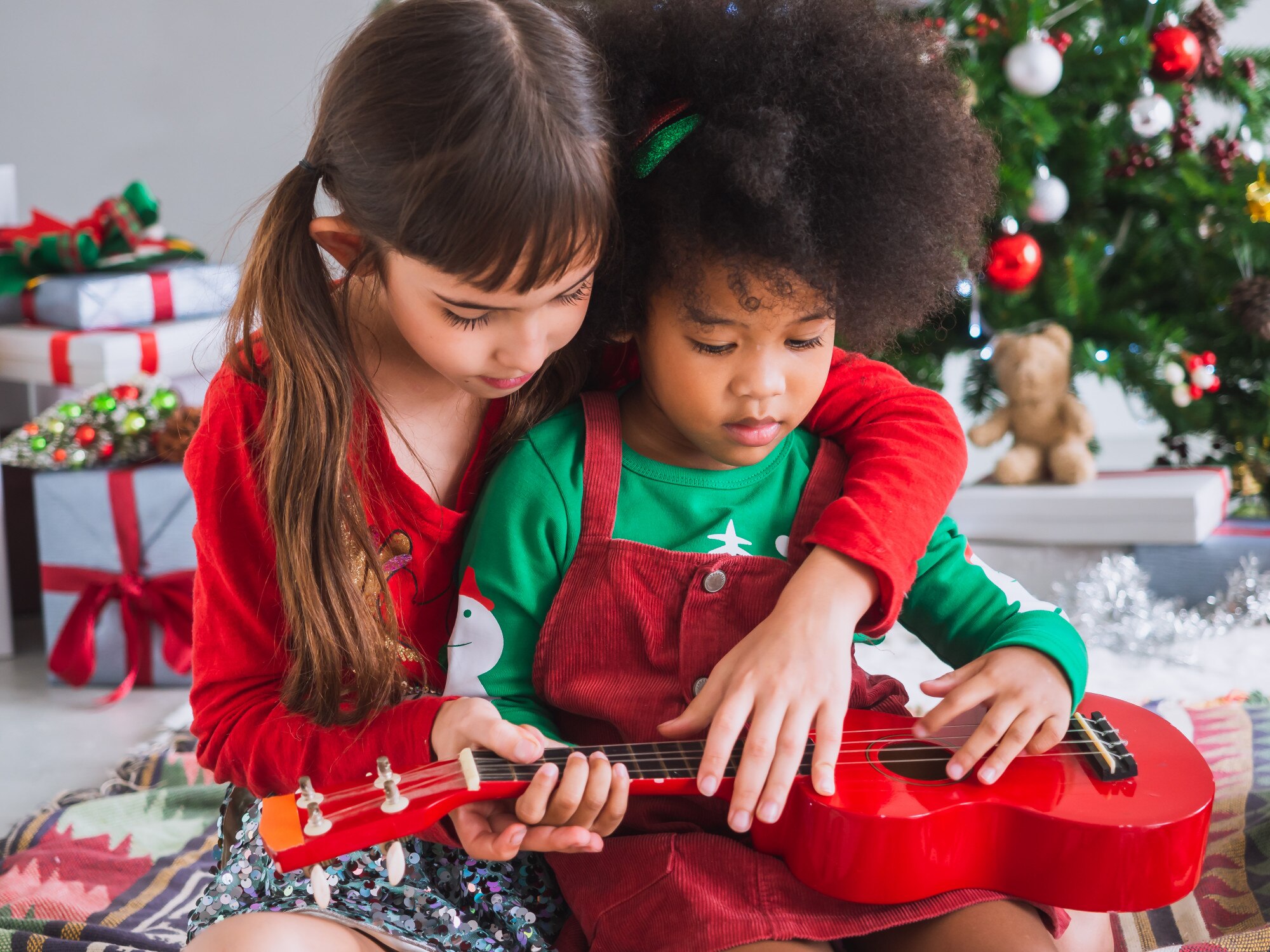
Every day at Simply Sunshine starts with music. Morning gathering includes songs that welcome each child and build community. During the Christmas season, we add festive songs that children request and enjoy together.
Music helps us move smoothly between activities. Instead of simply telling children it’s clean-up time, we sing a Christmas-themed clean-up song that makes the transition fun. Music signals what comes next in our day and helps children prepare for changes.
We use music to mark special moments. Before meals, we might sing a gratitude song with a holiday twist. At rest time, gentle Christmas lullabies help children calm their bodies and minds.
The predictable rhythm of music throughout our day gives children a sense of security. They know what to expect, which helps them feel safe and ready to learn. This musical structure is especially helpful during the exciting (and sometimes overwhelming) Christmas season.
Intentional Teaching Through Songs
Each Christmas song we choose serves specific learning goals. “Jingle Bells” isn’t just fun; it teaches rhythm, following directions, and coordination as children perform the actions together.
“Rudolph the Red-Nosed Reindeer” tells a story with a beginning, middle, and end. This narrative structure builds comprehension skills while also teaching about kindness and acceptance through Rudolph’s journey.
We adapt songs to match children’s developmental stages. For younger children, we might sing just the chorus of “We Wish You a Merry Christmas” with simple hand motions. Older children learn all the verses and more complex movements.
Australian Christmas songs hold a special place in our curriculum. “Six White Boomers” teaches about Australian wildlife and traditions. We even create our own songs about Christmas in Moranbah, helping children connect holiday celebrations to their local experience.
Instruments: Making Music Interactive
Hands-on music experiences bring another dimension to learning. Jingle bells become the perfect Christmas instrument as children shake them fast or slow, loud or soft. This exploration teaches them about sound, rhythm, and musical expression.
We create simple homemade instruments from recycled materials. Children might make shakers from empty containers filled with beans, or drums from oatmeal containers. This craft activity extends the music experience while teaching sustainability.
Musical games add fun while building skills. “Musical Statues” with Christmas songs helps children practice listening and self-control as they freeze when the music stops. “Pass the Jingle Bell” teaches turn-taking and cooperation.
For older children, we introduce basic concepts about how instruments work. They learn that drums make sound through vibration and bells ring when metal pieces hit together. This simple science of sound fascinates them and builds early STEM knowledge.
Family and Community Engagement
Music creates strong connections between our centre, families, and the wider community. These musical bridges help children feel secure and valued as they move between home and childcare.
Family Connection Through Music
Children love sharing what they learn at childcare. When they teach their families the Christmas songs from Simply Sunshine, they become the experts. This role reversal builds confidence and reinforces their learning.
We send home song sheets so families can join in the fun. These lyric sheets serve double duty—they help parents sing along with their children while also supporting early literacy as children see the written words to songs they know.
Many families tell us that our Christmas songs become part of their own holiday traditions. The music creates lasting memories and strengthens the connection between home and centre experiences.
We respect the diversity of family traditions by including a variety of songs in our program. We invite families to share their own cultural music and celebrations, creating a rich tapestry of musical experiences for all children.
Creating Our Christmas Concert
Our end-of-year celebration showcases the joy of music while keeping children’s well-being at the centre. We focus on the process rather than perfection, creating a low-pressure environment where every child can shine.
Children help choose the songs they want to perform, giving them ownership of the concert. Some might sing in a group, while others might prefer playing instruments or doing actions. We honour each child’s comfort level.
Our concert preparation becomes a learning journey. Children practice listening skills, build memory, develop confidence, and experience the satisfaction of working toward a goal. The performance itself is just the final step in this rich learning process.
Families treasure these musical moments. Seeing their child sing “Jingle Bells” or play a triangle in the Christmas concert creates precious memories. These shared experiences strengthen the bonds between children, families, and our centre.
Musical Memories and Cultural Identity
The Christmas songs children learn now will stay with them for years to come. Many adults still remember the songs from their early childhood Christmas celebrations—these musical memories form part of who we are.
Music helps children connect to their cultural heritage. Australian Christmas songs about summer celebrations help children understand their unique place in the world, different from the snowy Christmas scenes they might see in movies.
For children from diverse backgrounds, music offers a way to share their family traditions. A child might teach friends a Christmas song in another language or share a special musical tradition from their cultural background.
These musical experiences help children build a positive sense of identity. They learn that their culture and traditions are valued, and they gain an appreciation for the diversity of celebrations in our community.
Children who grow up with music gain a lifelong gift. The songs they sing at SimplySunshine may spark a love of music that continues throughout their lives, bringing joy and connection for many years to come.